> For the complete documentation index, see [llms.txt](https://docs.cloudeka.ai/llms.txt). Markdown versions of documentation pages are available by appending `.md` to page URLs; this page is available as [Markdown](https://docs.cloudeka.ai/cloudeka-api-list/command-reference/cldkctl-edit/clusterrole.md).
# clusterrole
The edit clusterrole command allows you to modify the configuration of an existing ClusterRole in your Kubernetes cluster. You can update cluster-wide permissions and access levels for various resources.
## Usage
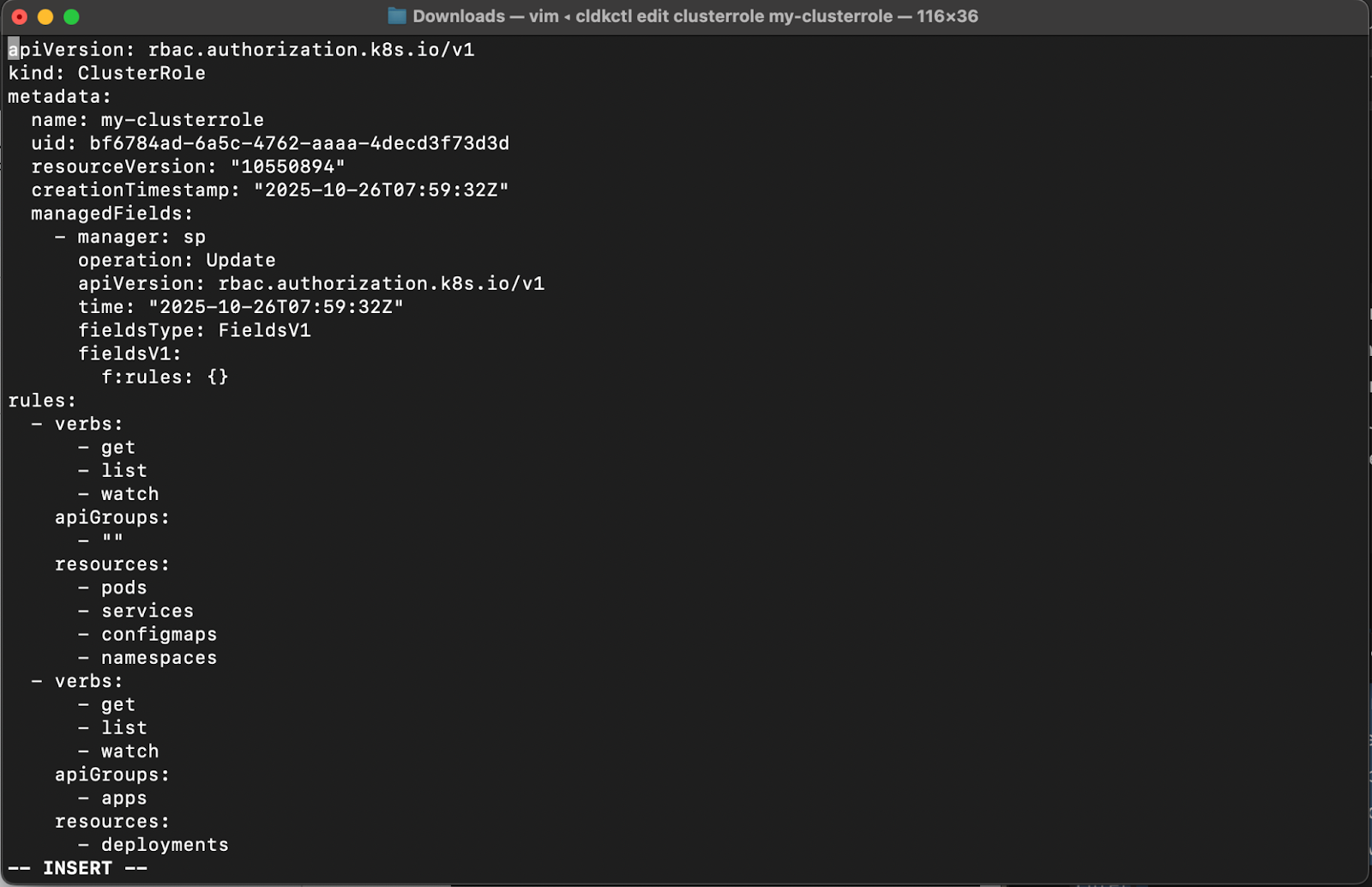
```
cldkctl edit clusterrole [name] [flags]
```
## Steps
Follow the steps below to run and view the result of this command:
1. Run the following command in your terminal:
```
cldkctl edit clusterrole [clusterrole name]
```
2. Replace `[clusterrole name]` with the name of the ClusterRole you want to modify.
3. To view the list of available resources before editing, refer to the corresponding **get clusterrole section.**
4. The ClusterRole manifest file will open in your default text editor (default: vim). Edit the configuration as needed, then save and close the editor to apply the changes. If you are using vim, press i to enter insert mode and make your edits. When you have finished editing, press Esc, type :wq, and press Enter to save and exit. To exit without saving changes, type :q! and press Enter.
5. Once completed successfully, a message “✓ Cluster Role updated” will appear in your terminal.
## Flags
{% hint style="info" %}
This command supports [global flags](/cloudeka-api-list/global-flags.md). Refer to the Global Flags section for details
{% endhint %}
| Flag | Description |
| ---------- | ---------------------------------- |
| -h, --help | Help for edit clusterrole command. |