> For the complete documentation index, see [llms.txt](https://docs.cloudeka.ai/llms.txt). Markdown versions of documentation pages are available by appending `.md` to page URLs; this page is available as [Markdown](https://docs.cloudeka.ai/deka-llm/create-a-new-llm.md).
# Create a New LLM
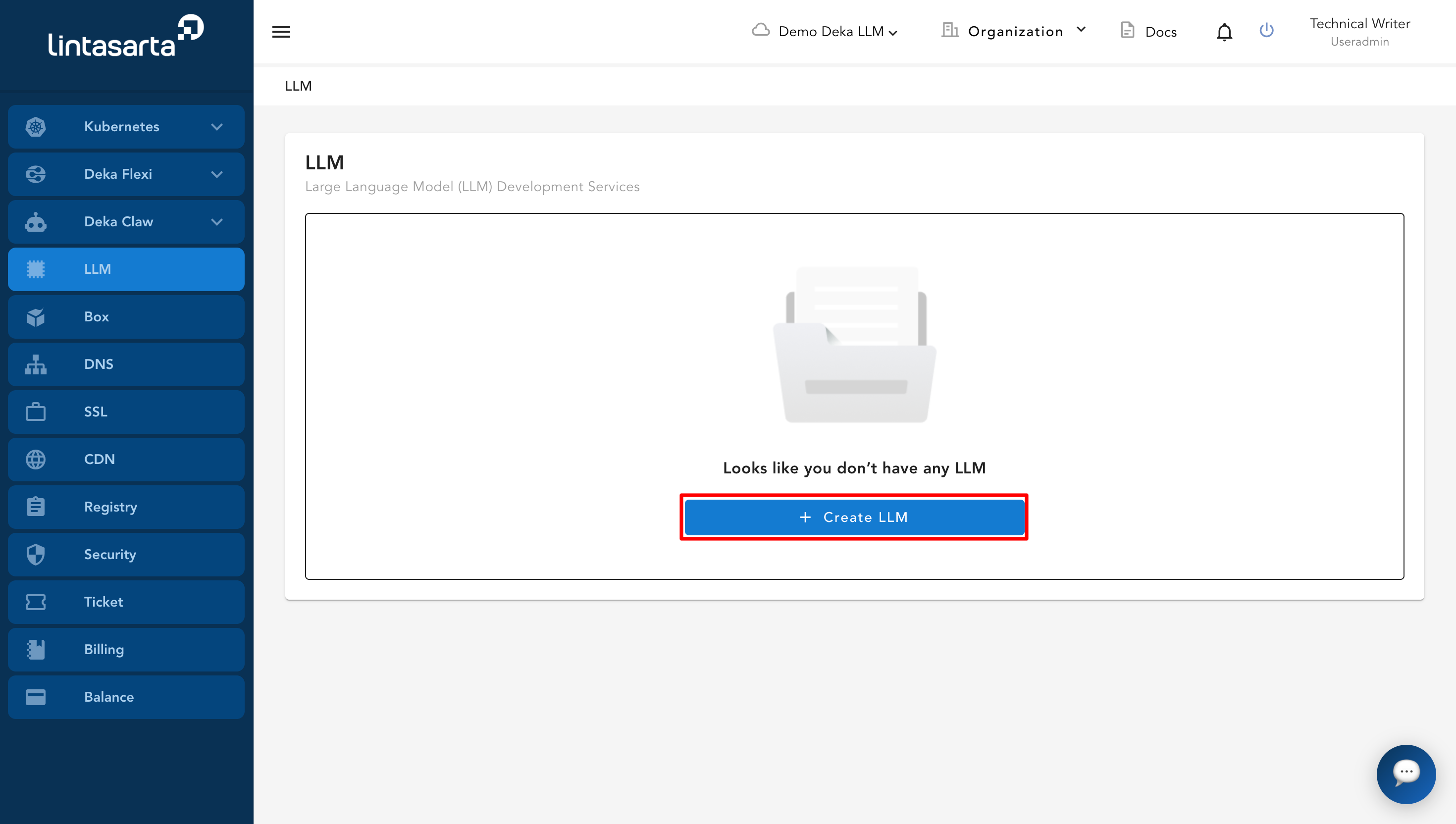
Create a New LLM for Enterprise Project or Individual is a feature provided in the Service Portal Cloudeka to create a new Large Language Model. Before creating a new LLM in the Service Portal Cloudeka, you need to determine the project type you are using. To check your project type, refer to the sub-section [Check Project Type](/deka-llm/check-project-type.md). This guide uses the Postpaid project type. In the Service Portal Cloudeka, go to the LLM menu and click the Create LLM button.
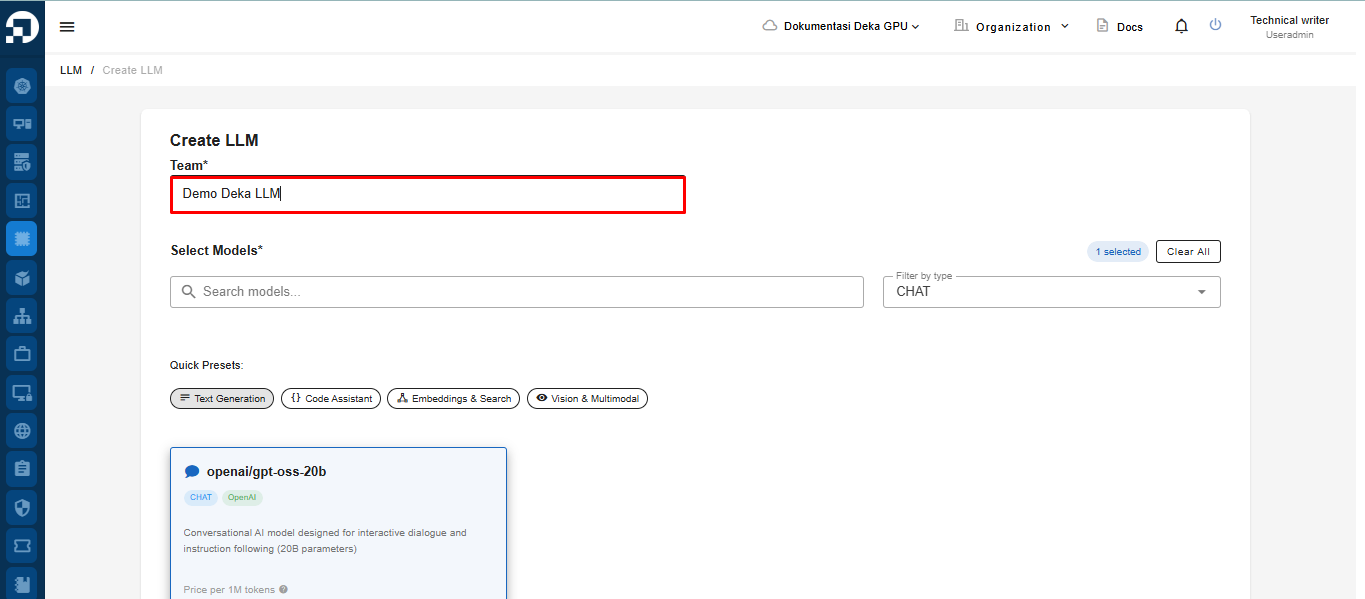
On the Create LLM page, enter the Team Name that will use the LLM model.
{% hint style="success" %}
Notes: For users with a Prepaid account type, there are differences in the service configuration steps:\
1\. The system displays two additional mandatory fields:
* Billing Type
* Purpose of Use
2\. Both fields must be completed before the user can proceed with the service creation process.
3\. This mechanism is required because token consumption will directly deduct from the prepaid balance according to the selected billing settings.
{% endhint %}
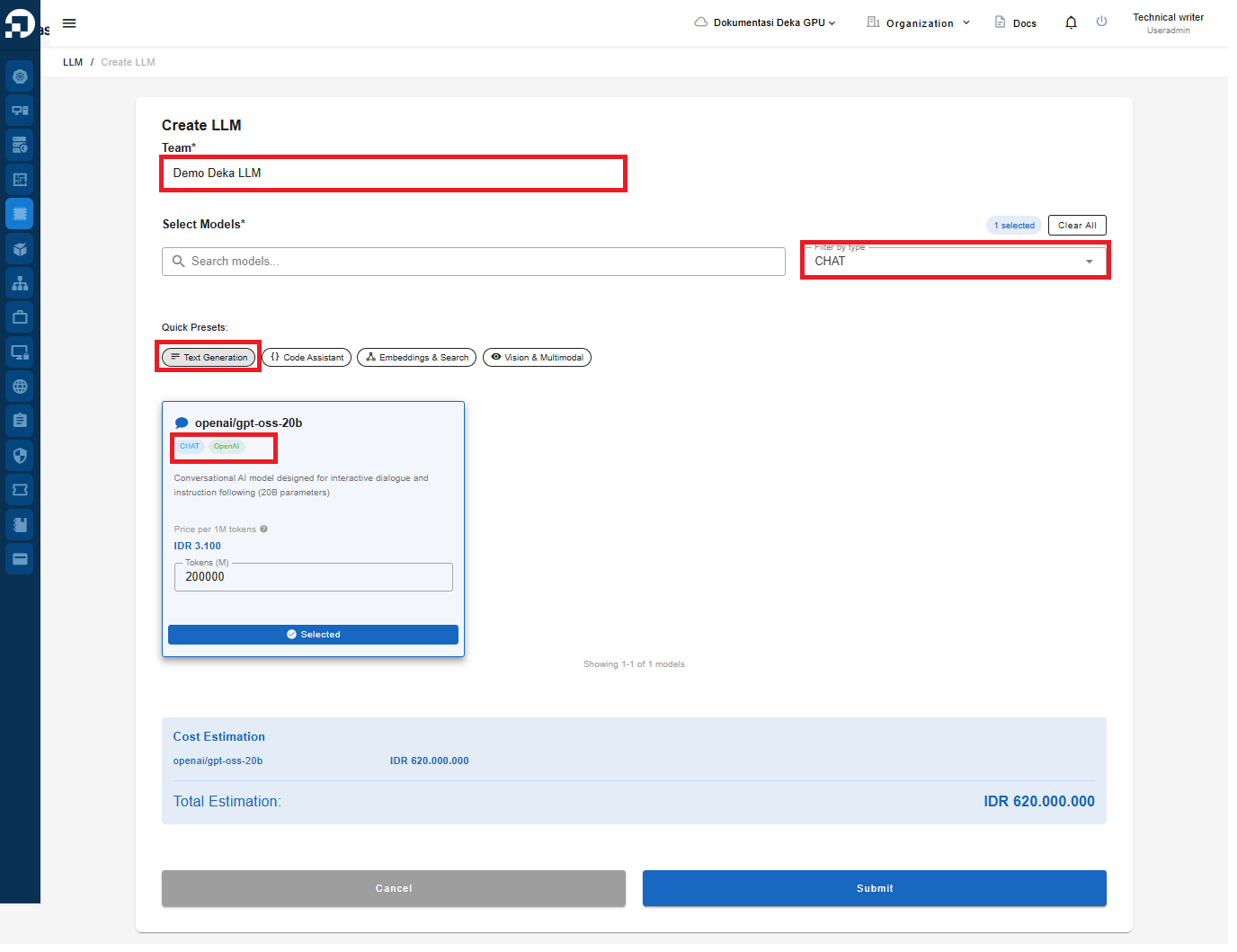
In the Filter by Type option, select one of the model types you want to use. Select Quick Presets, then select the model configuration, then enter the token.
{% hint style="success" %}
Notes: If the user selects the Chat type in the Filter by Type, then:
* The recommended Quick Presets option is Text Generation.
* The system (OpenAI) will display models that fall under the Chat Model category.
* The model configuration on the page will automatically adjust to the selected Chat type.
{% endhint %}
| Column | Description |
| ------------- | -------------------------------------------------------------------------------------------------------------------------------------------------------------------------------- |
| **Chat** | Functions to display models designed for interactive conversations. |
| **Code** | Functions to display models optimized for programming. This type of model is used for code generation, debugging, code explanation, or assisting developer tasks. |
| **Vision** | Functions to display models capable of processing figures/images. |
| **Embedding** | Functions to display models that generate vector representations of text. These are used for semantic search, recommendations, clustering, or integration with vector databases. |
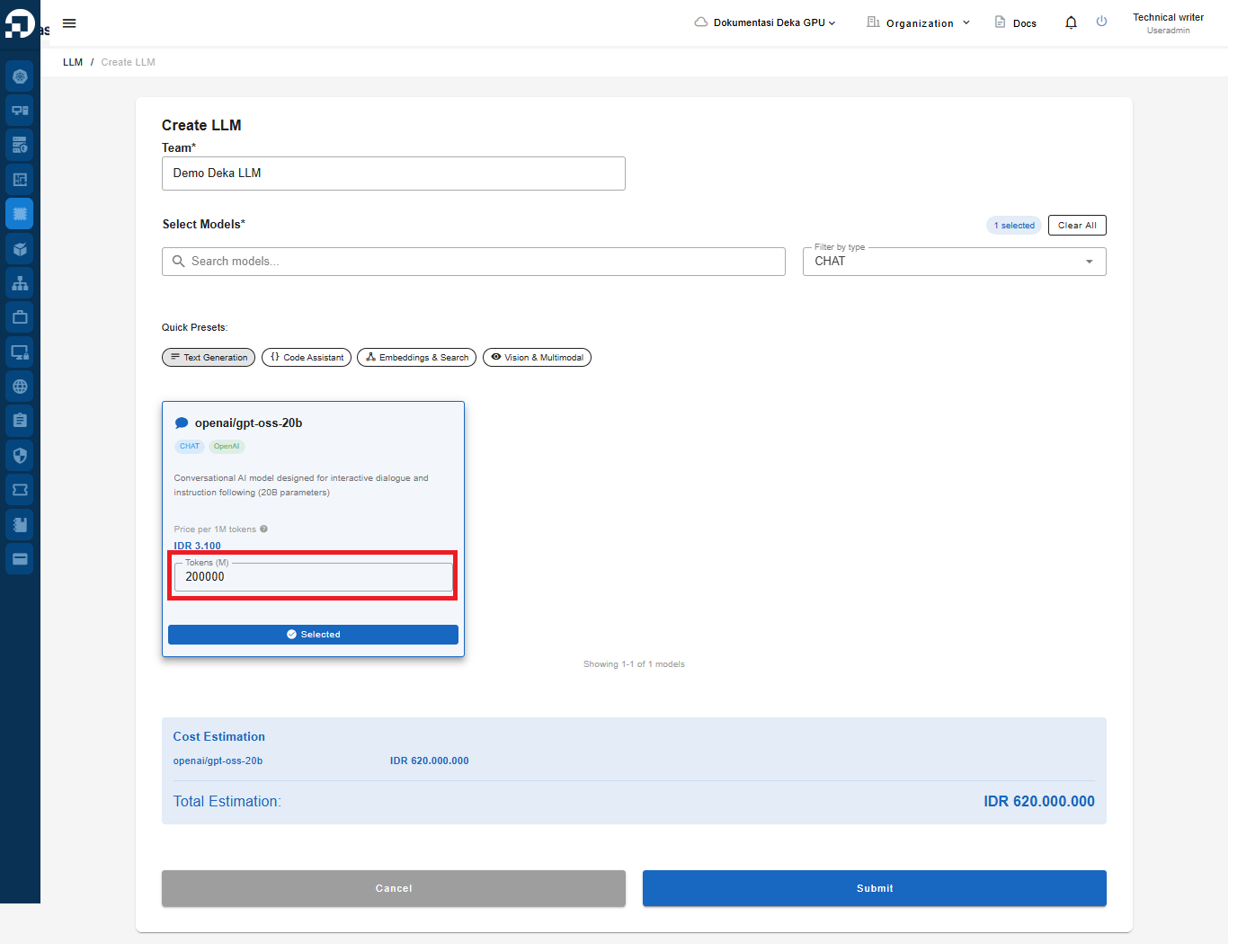
Enter the number of tokens to be added; the total cost will appear automatically.
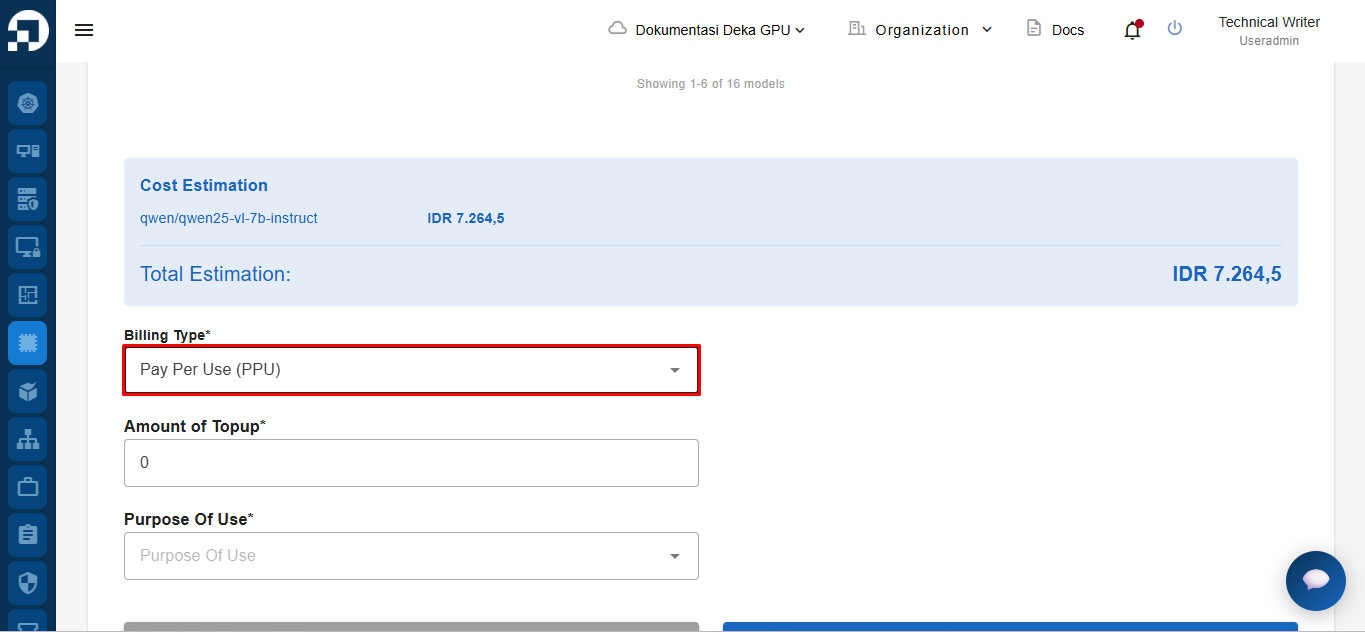
Scroll down to the bottom of the page, then select the **Billing Type**. In this guide, we will use **Pay Per Use (PPU)**.
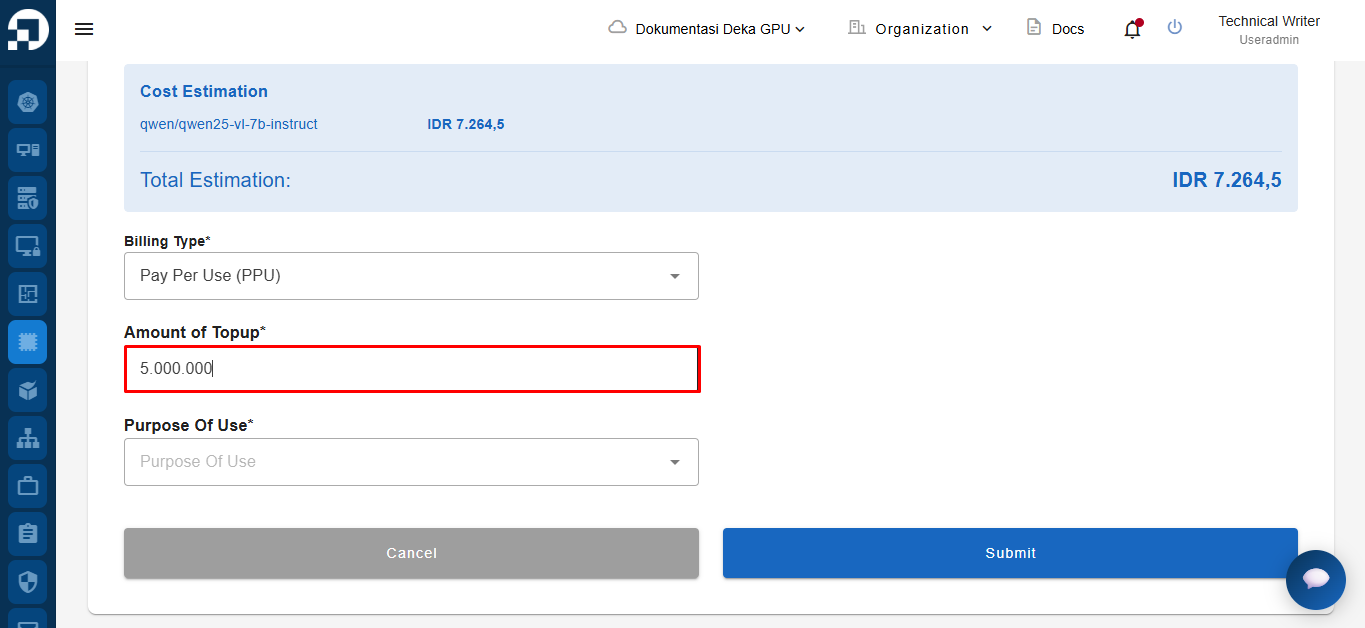
Enter the desired top-up amount in the **Amount of Topup** field according to your usage needs.
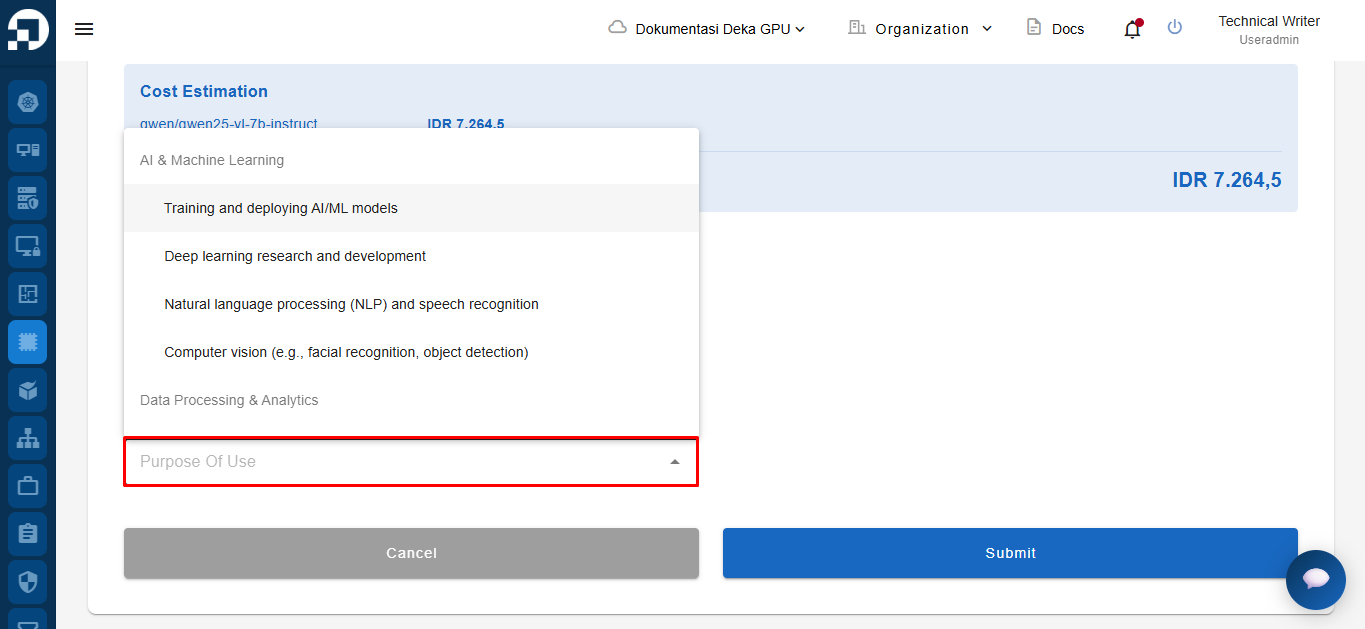
Next, complete the **Purpose of Use** field by selecting the appropriate usage purpose.
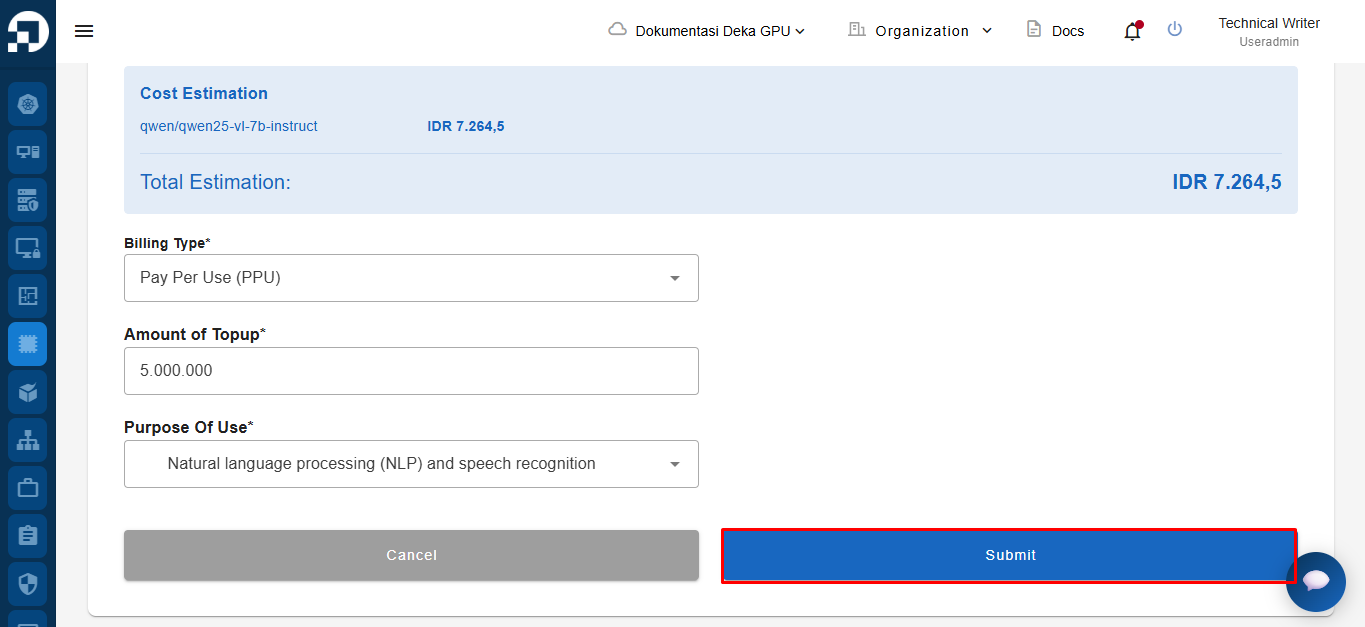
Click the Submit button after all required fields have been completed to create the Deka LLM.
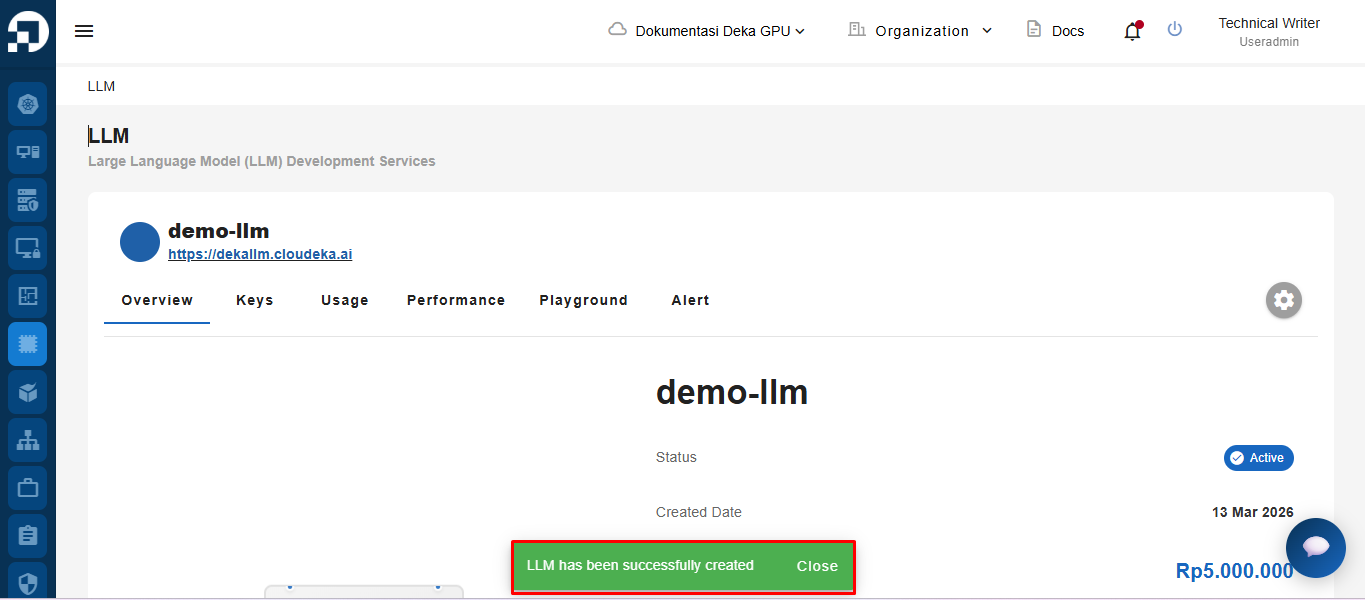
If the LLM is successfully created, a notification saying “LLM has been successfully created” will appear, and the system will automatically redirect you to the LLM detail page. For more information, see the Deka LLM Detail subsection.